First signs
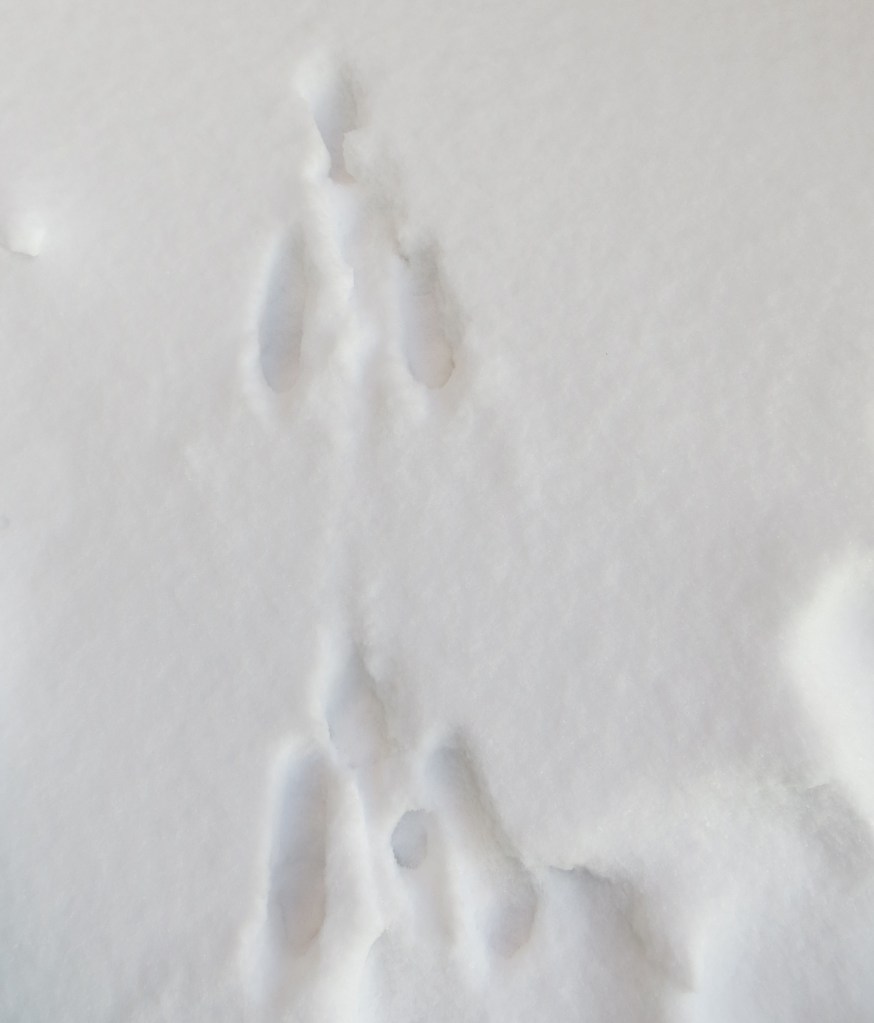
In January 2021, I saw some foot prints in the snow that had piled up in my garden, for a while I thought perhaps those belong to some children that had been playing there. But then, my friend Tuomas said those were the footprints of a hare! I was astounded and fascinated by the thought of having a hare hanging around in the garden while I slept.
Then, I started wondering: what is it eating during winter? there is barey any fresh vegetation around…poor thing! and so I decided to leave a carrot and see if it would eat it. Sure enough it ate it and so began our journey.

After leaving several carrots, then I became eager to spot the hare, but it wasn’t an easy task, since at first it mostly came very late at night.
Finally caught it!
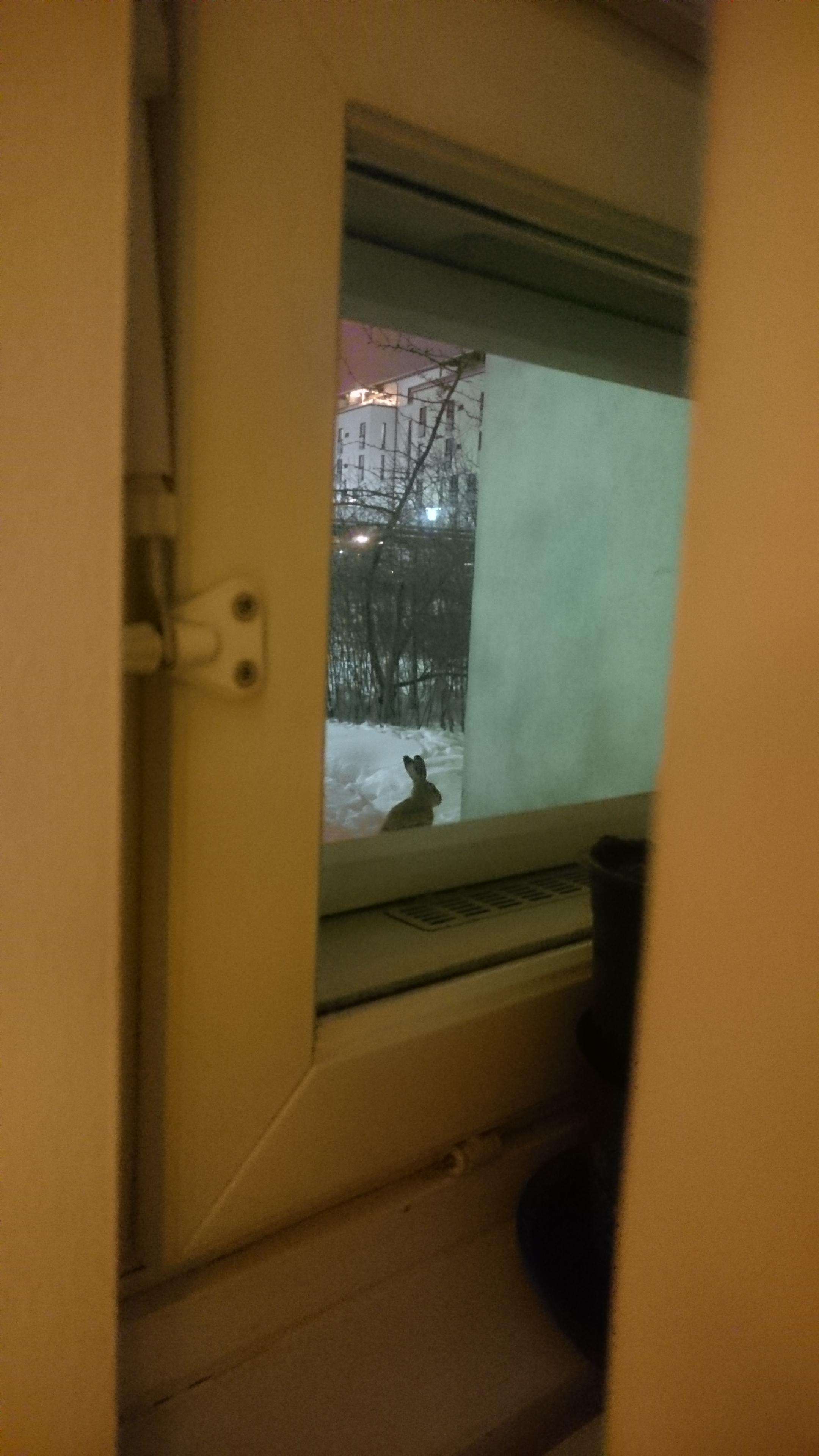
After nearly a month of leaving treats for the hare, one day in early February around midnight, by chance I looked through the window and saw something moving in the garden! I was scared at first, but then I realized it was my hare!! It was love at first sight and almost immediately I gave it a name: Sofia. Even if I did not know, was it a female or not. But, the name came naturally to my mind, perhaps after my dear aunt Sofia or perhaps after my favorite book “Sophie’s world”.
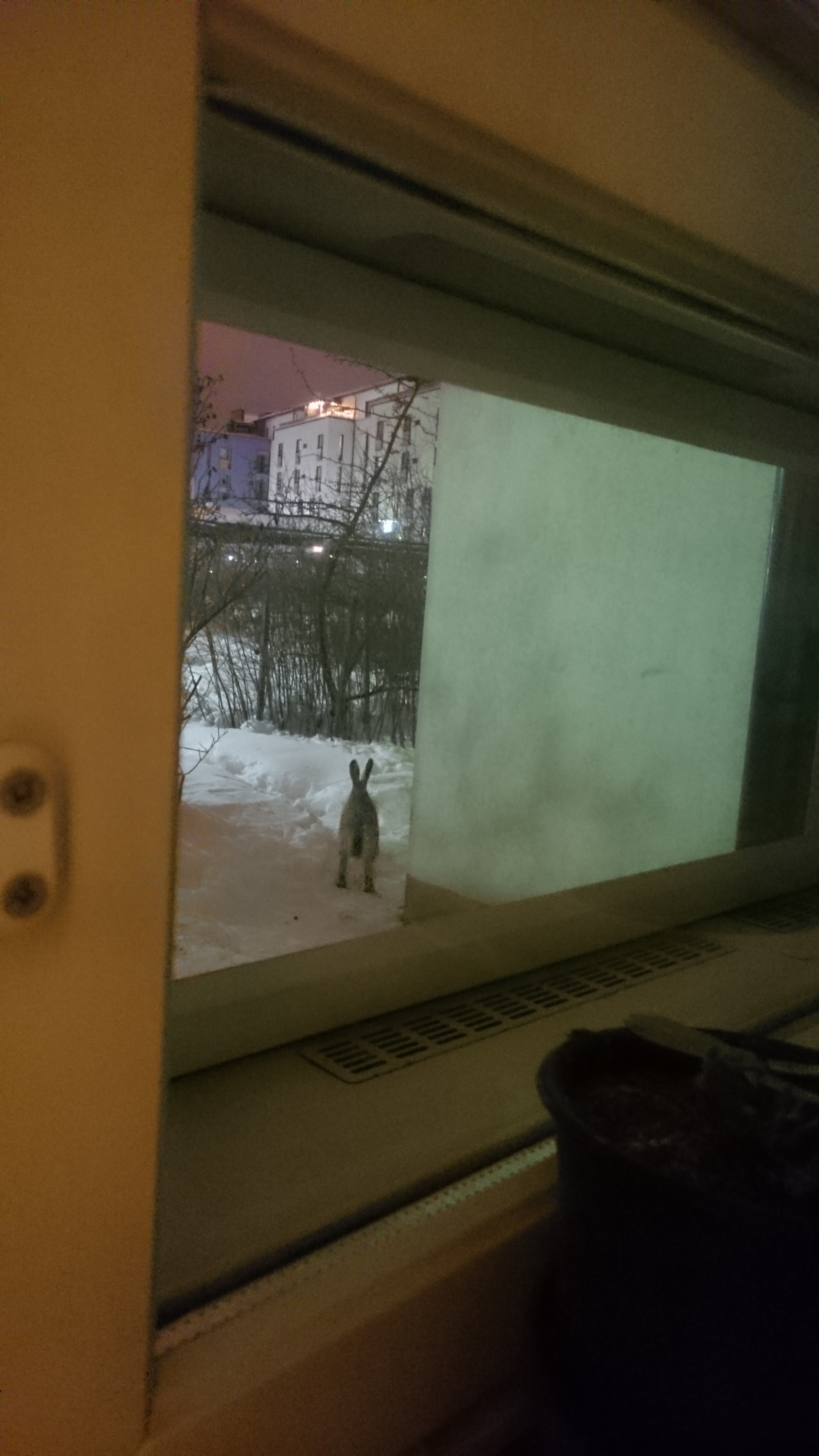
Feeding a wild pet
After seeing Sofia for the first time, I became more interested in feeding her properly, I read a bit about hare feeding habits and found out that during the winter months they can eat the twigs and buds of shrubs and even the bark of trees. I also found out that it is not good to give them too many carrots, because of the high content in sugar, which can alter their gut microflora. Thus I started to broaden the variety of veggie treats.
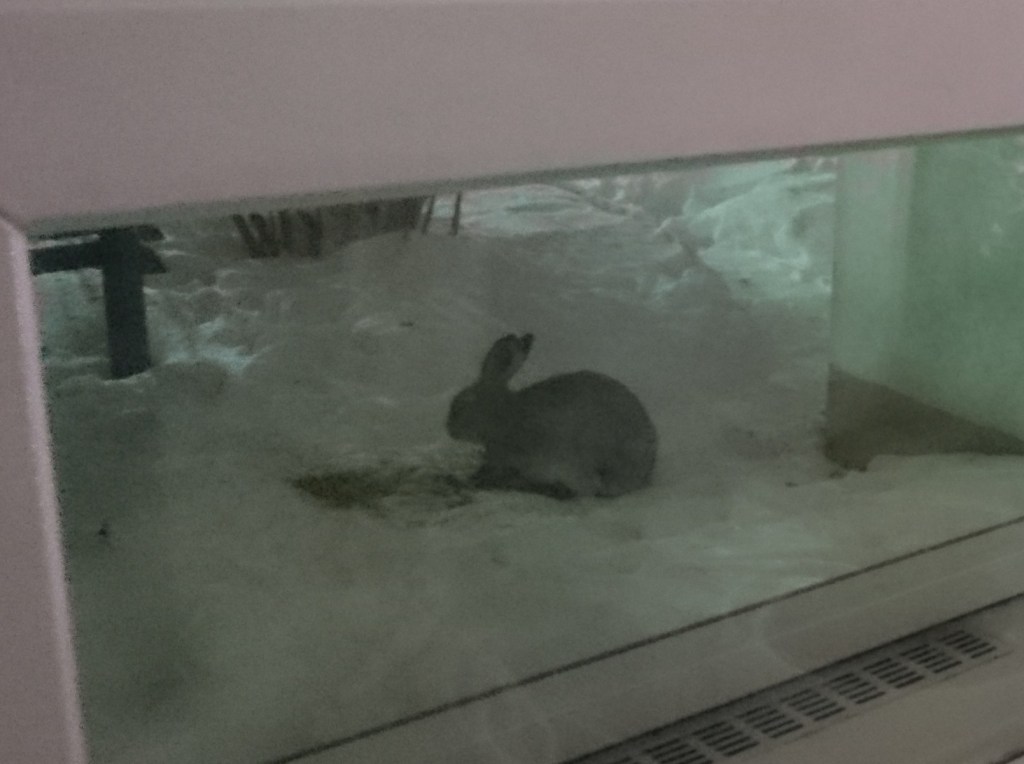
I fed Sofia all sorts of vegetables, broccoli and cauliflower stalks, Roman lettuce, paprika, celery, and even asparagus; I was surprised she did not like the latter two, because those should be more palatable than the bark of shrubs and trees. Perhaps she knew I had better stuff, so she would not accept everything. I also bought a pack of dried grass, which luckily she ate gladly.
It was fun to add extra veggies for Sofia in the supermarket list, and I felt identified with a fragment from “A winter book” by Tove Jansson, which coincidentally I was reading that winter. In that book there is a story called “The squirrel”, in which a woman who lives on a cottage ends up with a squirrel as a wild pet. This is the fragment that caught my heart:
<<She went to the list by the door and added: squirrel food…The two of them would adjust to each other. But it mustn’t grow tame, at all costs not too tame, she would never try and get it to eat out of her hand, come into the cottage, or come when she called. The squirrel mustn’t become a domestic animal, a responsibility, a conscience – it must be allowed to stay wild. They would each live their own lives and just watch each other and recognize each other, be tolerant and respect each other, and otherwise get on with their own activities in full freedom and independence>> From “A winter book” by Tove Jansson

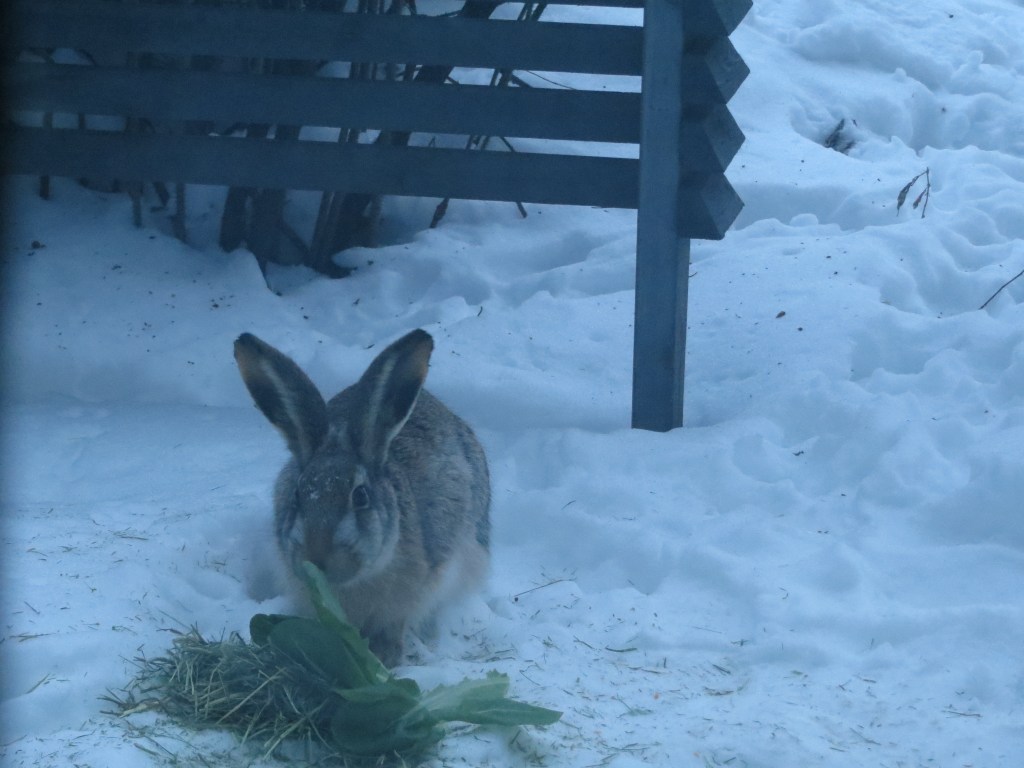
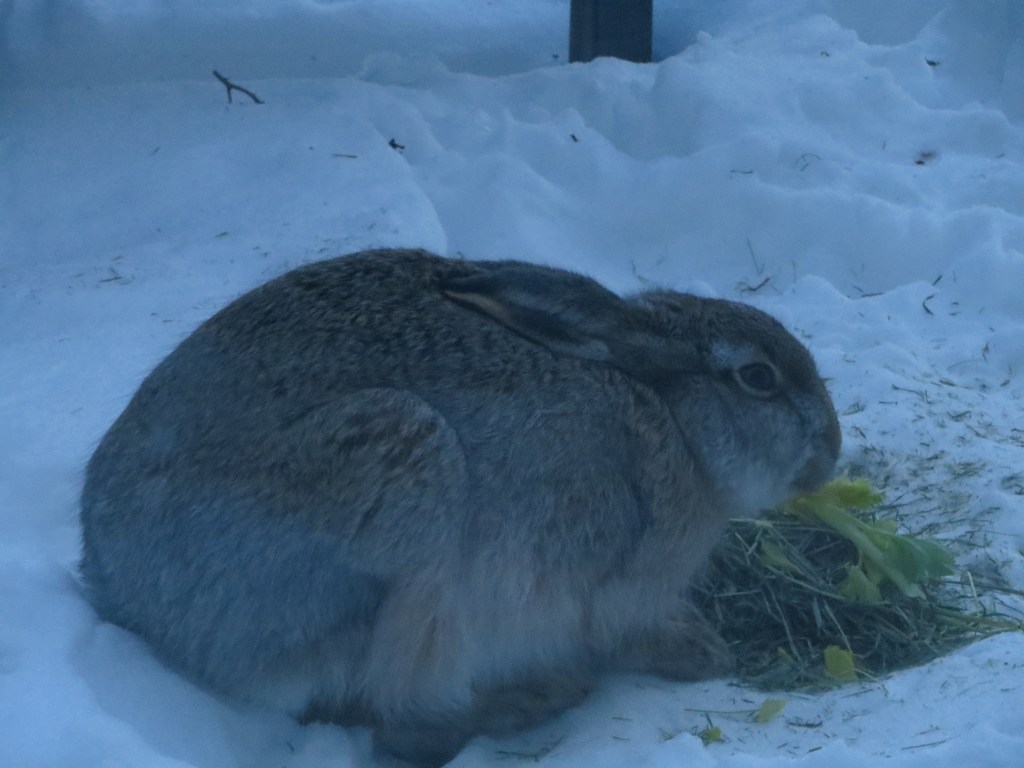
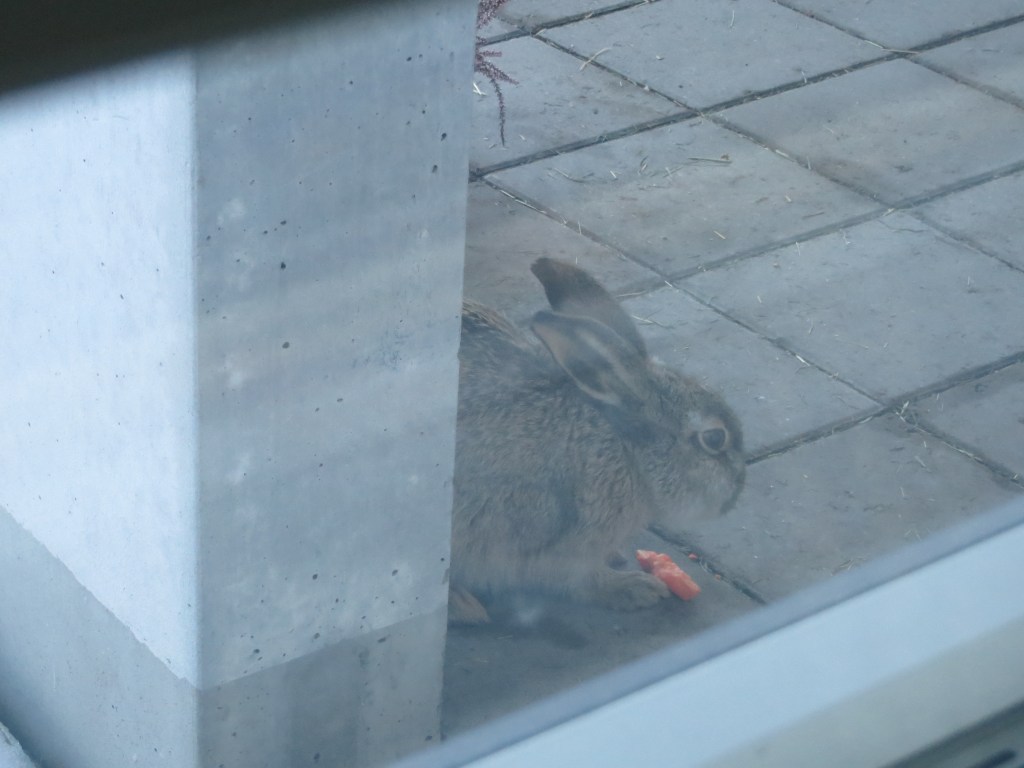
As time went by, Sofia got used to coming over for dinner almost every day. Then she started coming earlier and earlier, so that it was easy to see her. Then during the second half of February it was the most amazing time, as she became a regular costumer and for nearly two weeks always arrived at 5:30pm sharp! I was surprised at how she could be so brave to come when there was broad light, and even more surprised by her biological clock that was so punctual. It was a delight to see her arrive those days, specially because at the time the covid-19 situation was bad, and so I rarely had visits other than Sofia. Every day I looked forward to see her arrive from my desk, and she brightened and marked the end of my home-office work days.
And so it went away
Unfortunately, the hare visits came to a stop. I do not know what happened to Sofia, but she stopped coming. I could notice as her food was left untouched. Then some weeks later another hare came by, but I knew it was a different one, as it came at different time and did not eat all the things Sofia used to eat. I kept wondering what could have happened to my original hare, did a fox ate her? did a car run over her? or did some crows attack her? I shall never know. But anyway, I am happy for the days she did come, and for keeping me company during the first months of 2021.
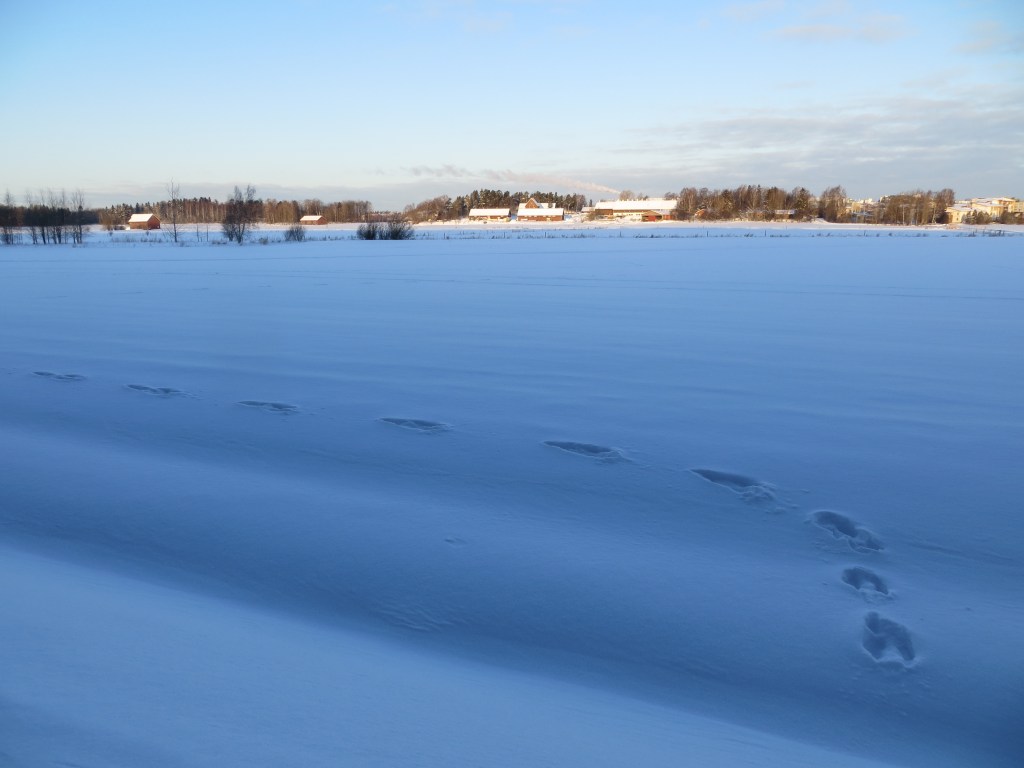
Extended family sights
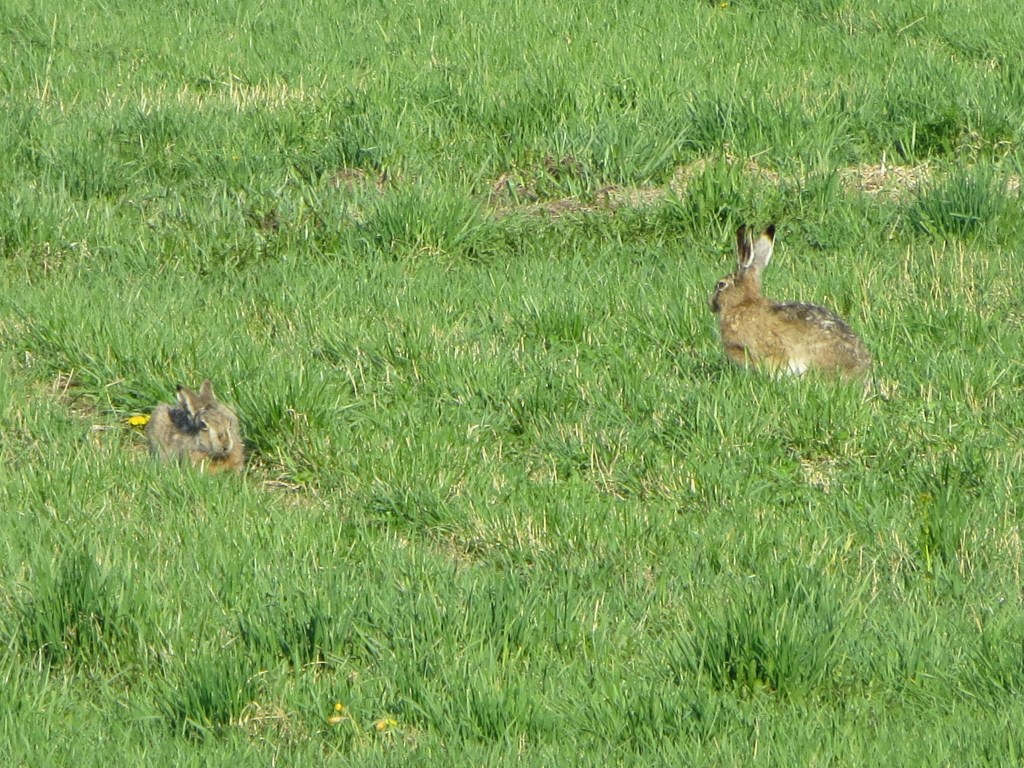
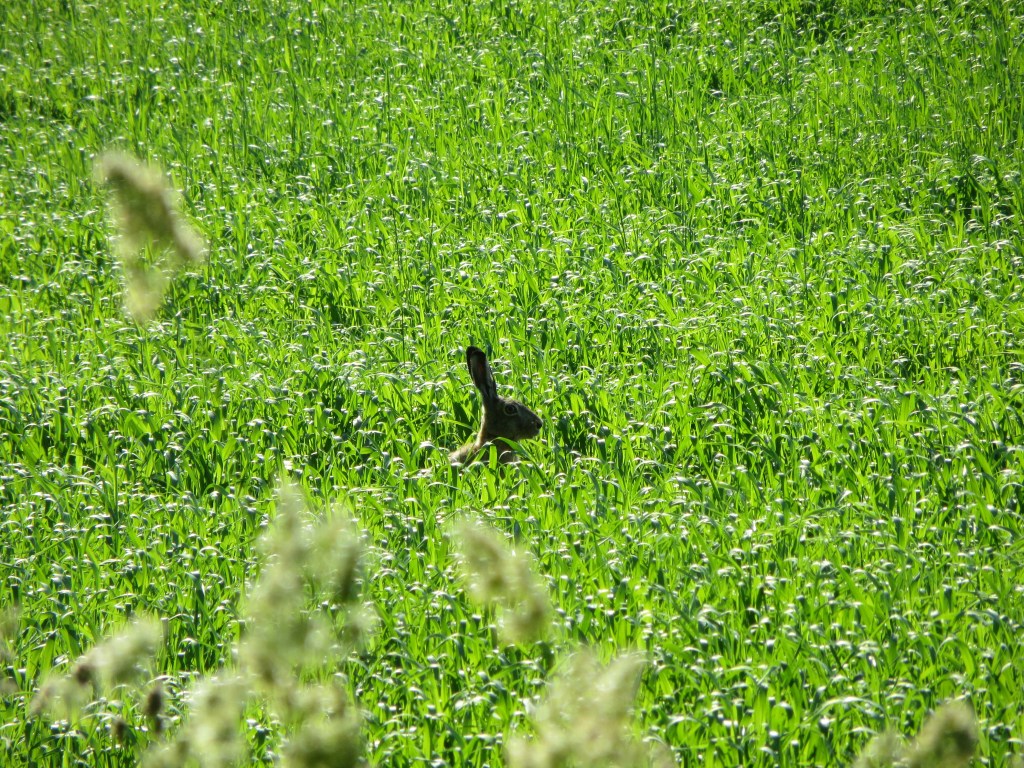
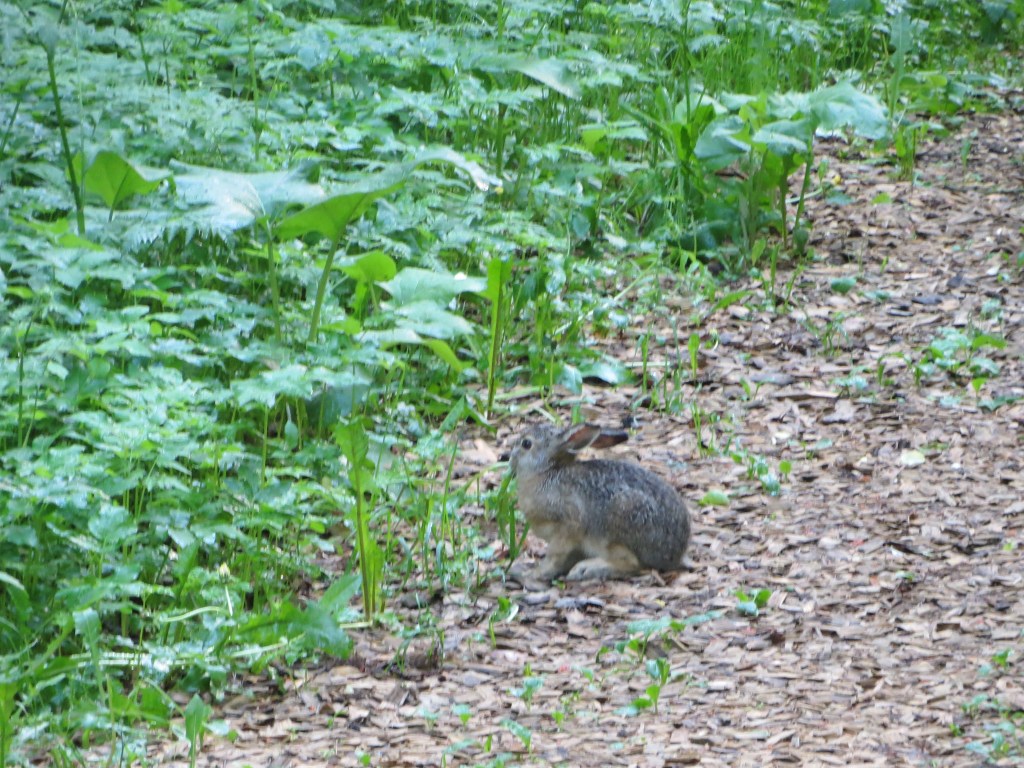
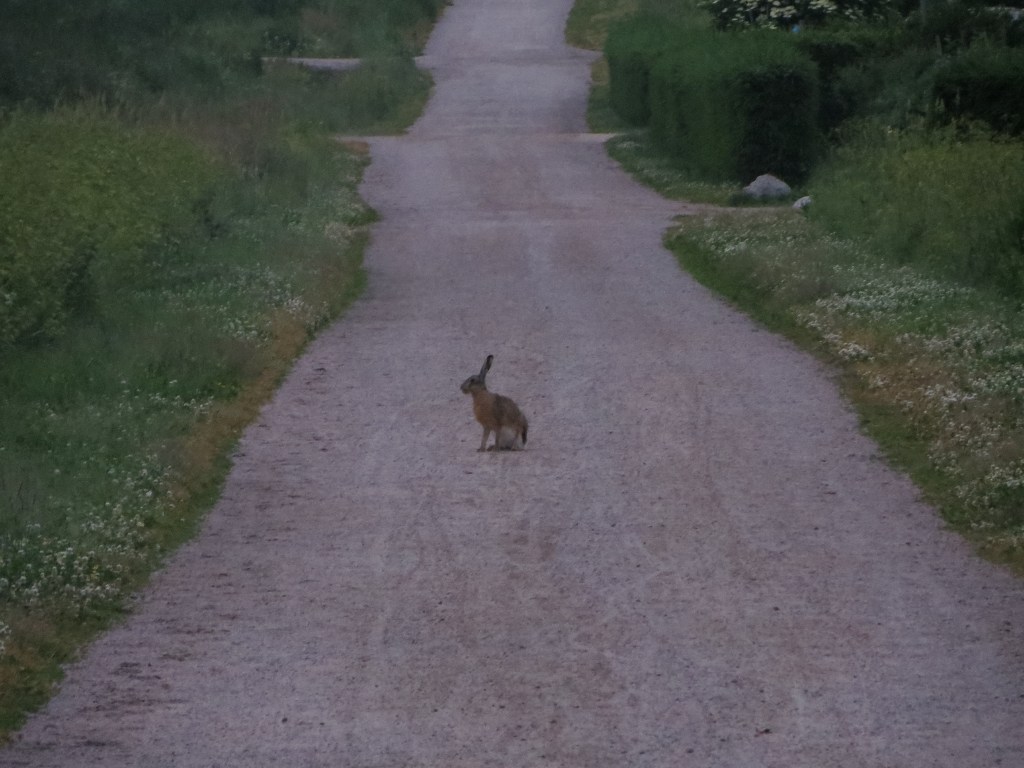
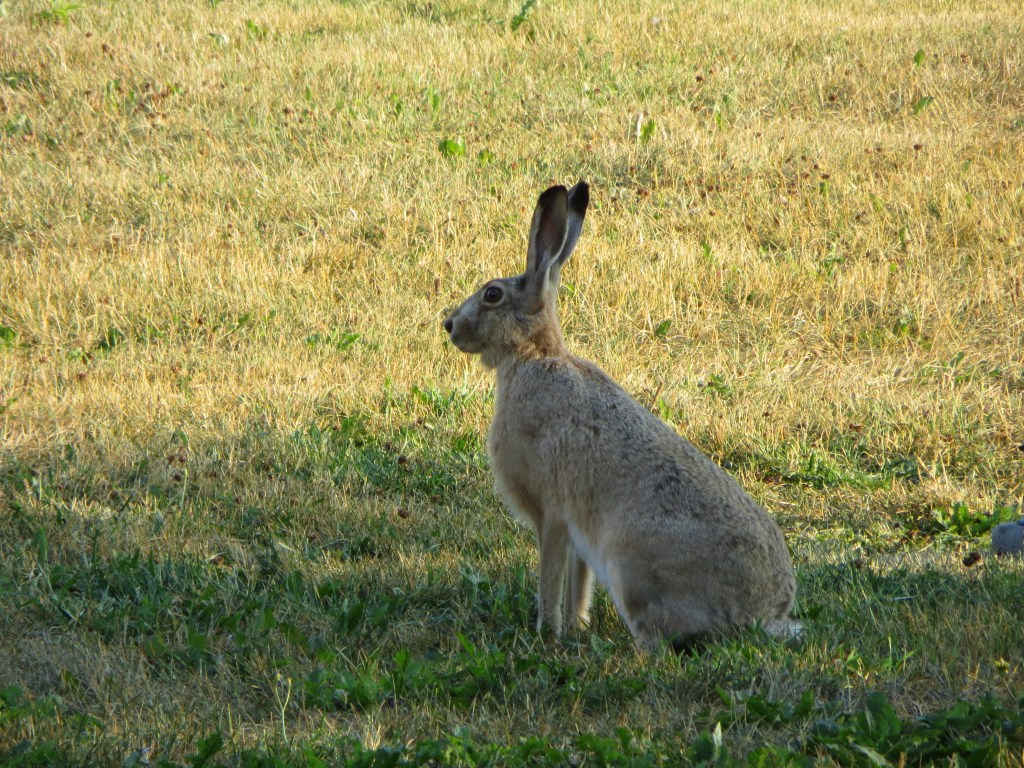
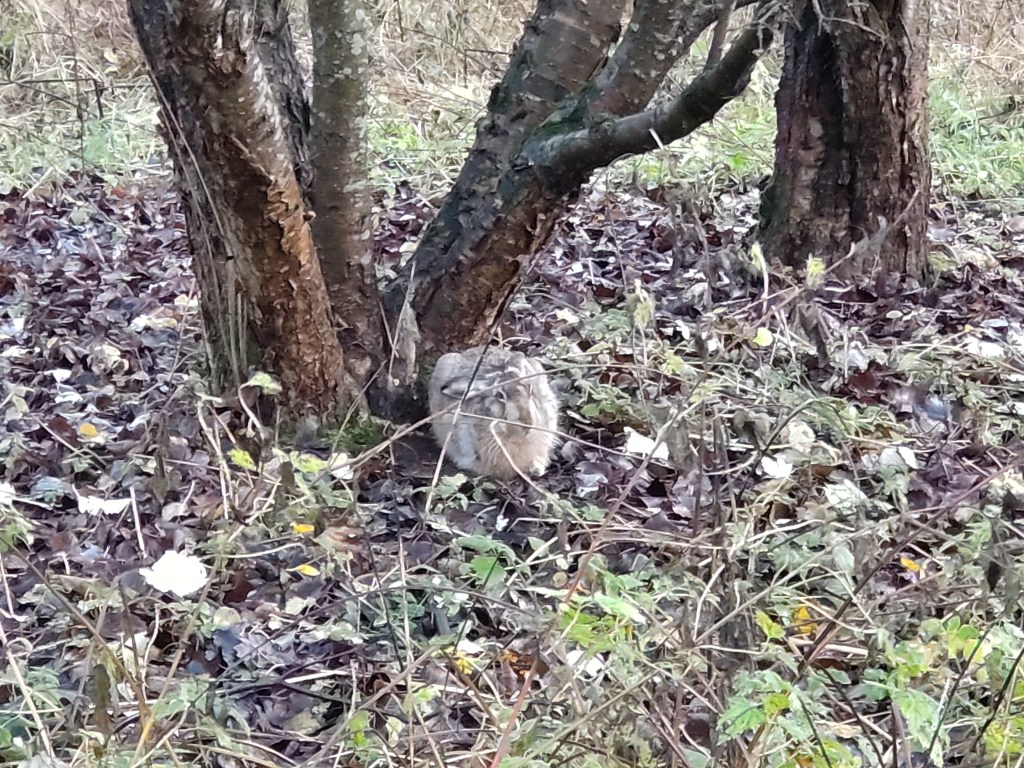
A year has passed, and I now see hares with a new found appreciation, as I imagine they are the relatives of Sofia. Having a pet is not an easy endeavor if one wants to have independence and also respect the freedom of the animals. I wonder if I’ll ever be brave to own a pet… but for the time being I just enjoy having fun spotting Sofia’s relatives in the wild:
Random facts about hares
- They are able to run 45 miles/h, meaning they are faster than a puma!
- They are born with their eyes open and fully furred.
- It only takes 45 days of gestation for a hare.
- They can be pregnant twice at the same time, this phenomena is known as superfoetation.
- They change their coat twice a year, depending on the temperature and daylight.
Bonus points for…
Having a temporary wild pet: 5/5 totally worth it! it made my imagination fly and became one more exercise to learn to let go of things.
A hare visiting you daily: 6/5 priceless!! specially during the pandemic.
Learning curious facts: 5/5 some random trivia to share with people, and still so much more to learn about hares!
 Bonus Points
It melted my heart!
LikeLiked by 1 person
What a great and heartfelt story! Makes me remember the words of some great author: “let’s not be sad that they are gone, but let’s be happy that they were here.” ❤
LikeLiked by 1 person
That’s right! very wise wise words! ❤ and I am happy that Sofia was here thanks to your footprint identification skills! 🙂
LikeLike
Very much enjoyed the story! This blogpost made me feel warm and happy. What a lovely company during pandemic times! Also bonus points for the National Geographic-level of hare capturing 😉
LikeLiked by 1 person
A warm feeling and happiness while reading, is the perfect reaction! ❤ Thank you for the bonus points and warm words, they will be my motivation for the next post! 🙂
LikeLike
Absolutely wonderful. A very well elaborated writing that attracts attention from the first moment. A story that transported me to the natural world of Helsinki in wich I admired the way in wich with patience and love you managed to generate a different kind of sharing with a wild animal. The pictures caught my heart too!. A story that undoubtedly left valuable teachings and life lessons. Congratulations!.
LikeLiked by 1 person
I’m happy to have brought you back to Helsinki with this story and looking forward to your next visit! Thank you for the generous words ❤
LikeLike